
A key usually doesn’t snap because of one unlucky twist. Most of the time, it’s been under stress for a while. A stiff lock, a worn key, the wrong angle, or a bit too much force can all build up until the weakest point gives way.
As a locksmith, I see this a lot. Someone’s rushing home, the door won’t open smoothly, they lift the handle, turn the key harder than normal, and then feel that horrible soft “give”. Half the key is in their hand. The other half is stuck inside the cylinder.
The good news is that a broken key doesn’t always mean a ruined lock. The bad news is that poking around with the wrong tools can quickly turn a simple extraction into a damaged cylinder, damaged door, or even a full lock replacement.
Mclocklin locksmiths attending a snapped key in Carlisle.
Why keys snap in locks
Keys are small pieces of shaped metal doing a pretty demanding job. Every time you unlock the door, the key has to line up internal pins, sliders, wafers, or dimples inside the lock. If everything is clean, aligned, and in good condition, it feels easy.
When something isn’t right, the key takes the strain.
Most domestic keys are made from metals such as brass, nickel silver, or steel alloys, depending on the lock type and manufacturer. Brass keys are common because they’re easy to cut and resist corrosion, but they’re still softer than many people expect. If a key bends slightly or has tiny cracks near the shoulder or blade, it can fail under pressure.
Common causes include:
- A worn keyOver time, the edges and cuts on a key become rounded. If the key doesn’t lift the lock components correctly, people often compensate by wiggling or forcing it.
- A stiff or dirty cylinderDust, worn metal particles, old lubricant, and weather exposure can all make a lock harder to turn.
- Poor alignment between the door and frameIf the latch or multipoint hooks are under pressure, the key may feel like it’s fighting the door rather than the lock.
- Using the key as a handlePulling the door towards you with the key while turning it puts bending force through the blade. Keys are made to turn, not to pull a door into place.
- A badly cut duplicateA copy that’s slightly off can still go into the lock, but it may not work smoothly. That extra resistance matters.
- The wrong keyIt sounds obvious, but similar-looking keys get forced into locks all the time. If it doesn’t slide in cleanly, stop.
A key is strongest when it’s fully inserted and turned in line with the cylinder. It’s weakest when it’s partly inserted, twisted at an angle, or pulled sideways.
The right way to use a key in a door lock
A lot of snapped key problems start with door movement, not the key itself. This is especially true with uPVC, composite, and multipoint locking doors.
With many modern doors, the handle has to be lifted fully before the key is turned. Lifting the handle engages the hooks, rollers, or bolts. The key then locks the mechanism. If the door isn’t sitting correctly in the frame, the mechanism can bind.
Here’s the safer way to use the key:
- Push or pull the door gently into its natural closed positionDon’t use the key to drag the door into place.
- Lift the handle fully if the lock requires itOn many multipoint locks, the key won’t turn properly unless the handle is fully raised.
- Insert the key all the wayA partly inserted key puts stress on the tip and blade.
- Turn with steady pressureDon’t jerk it. If it doesn’t move, forcing it won’t help.
- Stop if the key feels stuck, gritty, or springyThat feeling is the lock telling you something’s wrong.
A healthy lock should feel consistent. It might not feel brand new, but it shouldn’t need shoulder strength. If you find yourself wiggling the key every day, lifting the door, pulling the handle hard, or saying “it’s always been awkward”, that’s the time to get it checked.
A small adjustment or service is usually cheaper than dealing with a broken key inside the lock at 10 pm.
Customer used the wrong key and snapped when used. Mclocklin locksmiths Carlisle
Thicker keys and stronger lock designs
Not all keys are built the same. Some higher-security locks use thicker or stronger key designs compared with basic flat keys.
For example, Ultion dimple locks use a dimple-style key. Instead of simple edge cuts along one or both sides, the key has drilled dimples on the flat faces. These keys often feel more substantial in the hand and can be thicker than standard cylinder keys. Other high-security dimple and restricted key systems may also use stronger key blanks, more complex profiles, and tighter manufacturing standards.
That extra thickness can help reduce the chance of bending or snapping, but it doesn’t make the key indestructible.
Even a thicker key can break if:
- The lock mechanism is seized
- The door is badly misaligned
- The key is already damaged
- The key is forced at an angle
- Someone uses the key to pull the door shut
A better key and cylinder can improve security and durability, but correct use still matters. Think of it like using a strong screwdriver. It can take a lot of pressure, but if you twist it sideways in the wrong slot, something will still give.
Higher-security locks can also be more precise internally. That precision is good for security, but it means the key and cylinder need to be kept in decent condition. If the key starts to feel rough, don’t wait until it fails.
Warning signs before a key breaks
Keys rarely snap without giving clues first. The trick is noticing those clues early.
Watch for these signs:
- The key needs to be lifted, pushed down, or wiggled to turn
- The key goes in but feels rough coming out
- The lock works from one side but not the other
- The key looks bent or twisted
- Fine cracks appear near the shoulder of the key
- The door only locks when you push or pull it hard
- The handle feels stiff before you turn the key
- The lock feels worse in cold, wet, or hot weather
Weather can make small door alignment issues more obvious. Timber doors can swell with moisture. uPVC and composite doors can expand slightly in heat. Metal components can also contract in cold conditions. None of that means your lock is faulty by default, but if the key is taking the load, it’s worth sorting.
The shoulder of the key is one of the most common weak points. That’s the area where the blade meets the wider bow you hold. If a key has been bent back and forth, even slightly, the metal can fatigue. Once that happens, one firm turn may be enough to finish it.
If you have a spare key, compare it with the one you use every day. A worn key often looks rounded, shiny in odd places, or slightly twisted when laid flat. If the spare works smoothly and the daily key doesn’t, stop using the worn one.
What to do if the key snaps in the lock
If you’re standing at the door with half a key in your hand, take a breath. What you do next makes a big difference.
A snapped key can sometimes be removed cleanly, especially if part of it is close to the entrance of the keyway. But the more the broken piece gets pushed in, turned, or scratched at, the harder the job becomes.
Here’s what to do.
Leave the broken piece where it is
Don’t push another key in behind it. Don’t try to turn the remaining stump if it’s barely gripping. If the broken part is still aligned with the lock pins or internal components, forcing it may jam it deeper.
If the door is open, try to keep it open. An open door gives a locksmith more options and may avoid unnecessary damage.
If the door is locked shut, avoid repeatedly trying the handle and key. That can put more pressure on the cylinder and mechanism.
Check whether any of the key is visible
If a small piece is sticking out, don’t grab it with heavy pliers and twist. A gentle straight pull may work if there’s enough metal to grip, but hard sideways pressure can damage the keyway.
If it doesn’t move easily, stop. At that point, it’s better to call a licensed professional.
Call a licensed locksmith
A professional locksmith will usually have extraction tools made for broken keys. These are thin, shaped tools designed to hook or grip the broken part without damaging the cylinder.
A locksmith can also check why it happened. That part matters. If the key broke because the door is misaligned or the lock is failing, simply removing the broken piece won’t fix the real problem. You could end up snapping another key later.
If your key snapped in lock and the door is your main entrance, the safest route is to contact a licensed locksmith rather than experimenting with DIY tricks from the internet.
Old thinner weaker keys can be a common cause of keys snapping in locks. Mclocllin locksmiths Carlisle
What not to do when a key breaks
This is where small mistakes become expensive ones. The temptation is to “just try something”, especially if you’re locked out or in a rush. But locks have tight tolerances. Scratching, bending, or blocking the keyway can make extraction harder.
Avoid these common mistakes.
Don’t use super glue
Super glue sounds clever in theory. Put a dot on the broken half, press it onto the piece inside the lock, wait, and pull.
In real life, it often makes a mess.
Glue can run into the cylinder, stick pins or sliders, and make the lock unusable. If glue gets into the keyway, a locksmith may have fewer repair options. You could turn a simple extraction into a cylinder replacement.
Don’t force another key into the lock
A spare key won’t push the broken piece out. It’s more likely to push it deeper. It can also damage the spare key or jam the internal parts of the lock.
Don’t drill the lock unless you know exactly what you’re doing
Drilling is a destructive method. Locksmiths may drill in certain situations, but it’s usually a last resort or a controlled method used with the right knowledge. Random drilling can damage the handle, door, gearbox, or surrounding hardware.
On some secure cylinders, anti-drill pins and hardened parts make drilling harder than expected. That’s by design.
Don’t keep turning the stump
If half the key is still sticking out and the lock won’t turn, don’t keep twisting it. The remaining part may shear off flush with the cylinder. Once that happens, it’s harder to grip and remove.
Don’t spray the lock with the wrong product
People often reach for whatever oil they have in the shed. Some oils attract dust and can gum up over time. Locksmiths often use lock-specific lubricants, and the right product depends on the lock and fault.
If the key has already snapped, lubricant alone won’t solve it. It may help in some extraction situations, but it can also make tiny fragments slippery and harder to grip if used carelessly.
When the lock should be repaired or replaced
Removing the broken key is only half the job. The next question is why it broke.
A professional locksmith may recommend adjustment, repair, or replacement depending on what they find. Common follow-up fixes include:
- Cutting a fresh key from an unworn original or code
- Replacing a worn cylinder
- Adjusting the door keeps or hinges
- Servicing a multipoint locking mechanism
- Checking the gearbox if the handle feels stiff
- Upgrading to a stronger or higher-security cylinder
If the lock is old, stiff, and has already damaged one key, replacing the cylinder can make sense. If the door alignment is the real issue, a new cylinder alone may not fix the problem. You’ll still feel pressure when locking, and another key could fail.
For homes with basic euro cylinders, upgrading to a quality cylinder can improve both day-to-day feel and security. Dimple systems, restricted keyways, anti-snap cylinders, and stronger key profiles may all be worth discussing with a locksmith. The right choice depends on the door, the security level needed, and how the lock is used.
How to prevent a broken key in future
The best fix is prevention. A few simple habits go a long way.
Use the key gently and keep it straight. If the lock resists, don’t force it. Check the door position, lift the handle properly if it’s a multipoint system, and try again with steady pressure.
Keep a good spare key and use it as a comparison. If your daily key looks worn or works badly, get a fresh one cut before it fails. Use a reputable key cutter, especially for security keys or dimple keys, because accuracy matters.
Don’t ignore a stiff door. If the handle is hard to lift or the key only turns when you push the door, the door or lock needs attention. That’s not normal wear you have to live with.
Avoid hanging lots of weight from your keyring. Heavy bunches can pull on the key while it sits in the lock, especially when opening or closing the door. Over time, that extra leverage can contribute to wear.
For higher-security locks like Ultion dimple cylinders, use genuine or approved key blanks where required. Restricted or patented key systems are designed to work with specific blanks and cutting standards. A poor copy can cause problems even if it looks close.
warm pockets into a cold key way is likely why this snapped. Mclocklin locksmiths Carlisle
The safest move is to stop forcing it
A key should never feel like a battle with the door. If it’s stiff, sticking, or only working after a wiggle, something is wrong. It might be a worn key, a dry cylinder, a misaligned door, or a failing mechanism. Whatever the cause, forcing it puts the key under stress.
If the key does snap, don’t panic and don’t start poking around with glue, screwdrivers, or spare keys. Keep the door as it is, avoid pushing the broken piece deeper, and contact a licensed locksmith.
A good locksmith won’t just remove the broken key. They’ll check the reason it snapped, advise whether the lock needs adjustment or replacement, and help you avoid the same problem happening again. That’s the difference between a quick rescue and a repeat callout.
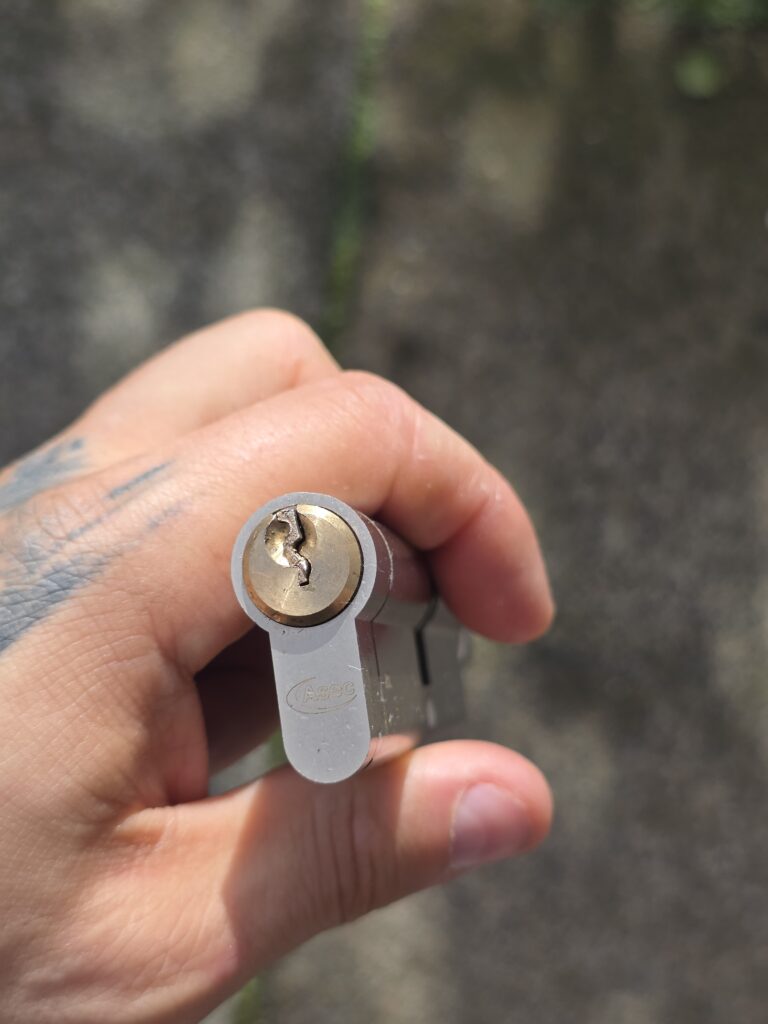
mclocklin locksmith attending a lock that had a snapped key in Carlisle.
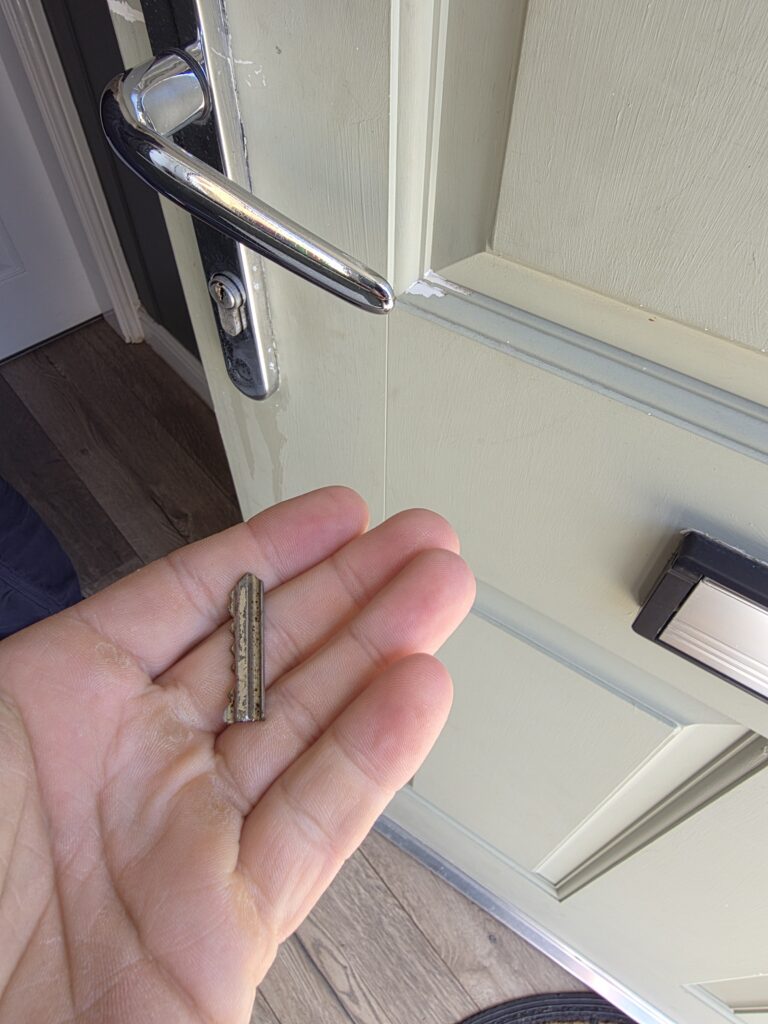
mclocklin locksmith in Silloth getting out a snapped key in the cylinder.